Smilely Handwritten Font for Joyful Craft Projects
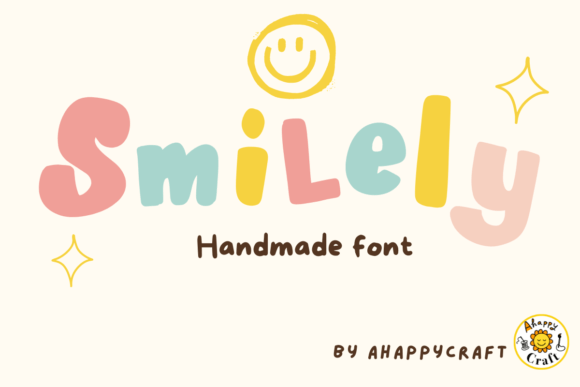
If you’ve ever held a handmade candle, opened a boutique gift box, or pinned a cheerful printable to your planner—you know how much a single font can shape the feeling of your product. Smilely isn’t just another script font. It’s a warm, bouncy, intentionally imperfect handwritten typeface that carries real personality—like your favorite pen scribbled with purpose and joy. As someone who designs labels for small-batch soaps, prints wedding welcome signs, and creates digital planners sold on Etsy, I reach for Smilely when I need charm that reads clearly, cuts cleanly, and connects emotionally.
Why Smilely Works So Well on Physical Products
Smilely lives in the sweet spot between playful and polished—a display font built for visibility and heart. Its rounded terminals, gentle slant, and open letterforms make it highly legible even at smaller sizes (think 14–18pt on jar labels or 24pt on sticker sheets). Unlike some overly ornate script fonts, Smilely avoids tight loops or excessive flourishes that cause cutting errors on Cricut or Silhouette machines. I’ve used it for vinyl-cut mug wraps, iron-on shirt transfers, and die-cut paper tags—and every time, the curves hold up beautifully in production.
The “quirky” in Smilely’s description isn’t just marketing—it’s functional. The slight irregularity in stroke weight and baseline variation gives each word organic movement, like handwriting done with confidence and care. That authenticity resonates with customers browsing handmade goods: it signals craftsmanship, not automation. When paired with a clean sans serif like Montserrat or Lato for body text or pricing details, Smilely becomes the friendly face of your brand—inviting, approachable, and unmistakably human.
Real Projects Where Smilely Shines
- Candle & soap labels: Use Smilely for scent names (“Lavender Dream,” “Citrus Grove”) or small-batch branding—its soft contrast keeps things elegant without looking fussy.
- Wedding stationery: Print Smilely on kraft paper welcome signs, acrylic place cards, or foil-stamped menus. It balances romance and modern simplicity better than many overused calligraphy fonts.
- Digital printables: Planner stickers, habit trackers, and printable wall art gain instant warmth with Smilely headings—especially when layered over neutral backgrounds or subtle textures.
- Seasonal packaging: From Easter egg tags to holiday cookie box seals, Smilely adds festive cheer without leaning into cliché. Try it in all caps for “Merry & Bright” or lowercase for “hand-poured with love.”
- Boutique product tags: Cotton twine + Smilely-printed cardstock = instant shelf appeal. Its readability at 10–12pt means customers can glance and understand—even under boutique lighting.
What to Expect Inside the Smilely Font Files
Smilely is part of the Script Amp collection, which means it’s designed with crafters and commercial creators in mind—not just graphic designers. You’ll get OTF and TTF files, plus web-optimized WOFF if you also use Smilely in digital shop banners or social media templates. While it doesn’t include extensive language support beyond basic Latin characters (A–Z, numerals, standard punctuation), that’s actually ideal for most physical product uses—no risk of unexpected glyph substitutions mid-print job. There are no alternate characters or swashes included, which keeps things predictable and production-safe. That’s a thoughtful choice: Smilely’s strength is consistency, not complexity.
Pairing Smilely Thoughtfully
Because Smilely is expressive by nature, it thrives when grounded with something simple. For printed product labels, I pair it with a light-weight sans serif (like Poppins Light) for ingredients or care instructions—clean contrast, zero visual competition. On wedding signage, a modest serif like Playfair Display works beautifully for formal details (“Mr. & Mrs. Smith”), letting Smilely carry the emotional weight in headings like “Welcome Home.” If you’re designing SVG files for cutting machines, keep Smilely as your headline font and use a geometric sans (like Raleway or Quicksand) for subtext—it ensures crisp vector output and fast load times in design software.
Readability Tips for Real-World Use
Smilely performs best at sizes 16pt and up for printed cards and signs. For stickers under 2 inches wide, stick to short phrases—two to four words max (“Hello Friend,” “Made With Love”). Avoid using it for full paragraphs or fine print; it’s a handwritten font, not a text face. When prepping files for print, always convert Smilely text to outlines before sending to your printer—this prevents font substitution issues and guarantees your joyful curves stay intact. And if you’re exporting PNGs for mockups, render at 300 DPI and double-check spacing in preview mode: Smilely’s natural rhythm means letters breathe, but they shouldn’t feel loose or disconnected.
Commercial Use You Can Count On
Smilely is licensed for commercial use—meaning you can confidently use it across physical products (labels, mugs, tote bags), digital downloads (planner pages, Canva templates), SVG bundles, client work, and even merchandise sold through your Etsy shop or Shopify store. No hidden restrictions. Just be sure to review the license terms for specifics around redistribution (e.g., embedding in editable Canva templates is allowed, but reselling the font file itself is not). That clarity matters when you’re building a sustainable creative business—not just making pretty things, but selling them with confidence.
At its core, Smilely is more than a premium font. It’s a quiet collaborator in your process—adding sincerity to a greeting card, distinction to a product label, and delight to a customer’s unboxing moment. It doesn’t shout. It smiles. And in a crowded handmade market, that kind of genuine, readable, commercially sound charm? That’s the kind of detail that turns browsers into buyers—and one-time customers into repeat fans.